Hormonal acne in adults is not the same as the acne you had as a teenager. It shows up differently, behaves differently, and needs a different approach. If you are dealing with deep, tender spots along your jawline or chin that seem to appear out of nowhere every month, you are not doing anything wrong. Your skin has simply changed, and your routine needs to change with it.
This guide walks you through a complete skincare routine for adult hormonal acne. It covers what to use in the morning, what to use at night, which ingredients actually help, and when it is time to stop guessing and see a doctor.
Why Adult Hormonal Acne Is Different?

Teenage acne usually shows up on the forehead and nose. Adult hormonal acne tends to cluster along the lower face, jawline, chin, and sometimes the neck . The spots are often deeper and more painful. They sit under the skin rather than coming to a quick head. And they tend to flare on a cycle, often the week before your period .
There is a biological reason for this. Hormones called androgens tell your oil glands to produce more oil. In some people, the skin is simply more sensitive to normal levels of these hormones . When oil production goes up, pores get clogged, bacteria multiply, and skincare routine for hormonal acne in adults.
What makes adult skin trickier is that it is often drier and more sensitive than it was in your twenties . The harsh, drying products that worked back then can now strip your skin barrier and make inflammation worse. The goal is not to dry out the acne. The goal is to calm the skin, keep pores clear, and support the barrier so it can handle hormonal ups and downs without overreacting.
Read Also: How To Moisturize Oily Skin Without Clogging Pores
Morning Routine: Protect and Calm
Your morning routine sets the tone for the day. It should be simple, gentle, and focused on protection.
Step 1: Gentle Cleanser
Wash your face with a mild, non-foaming cleanser. Avoid anything that leaves your skin feeling tight or squeaky. That tight feeling means your barrier has been stripped, which can trigger more oil production later . A fragrance-free gel or cream cleanser works well for most adult skin. You do not need a special acne cleanser with strong active ingredients in the morning. Save those for the evening.
Step 2: Azelaic Acid (Optional but Helpful)
Azelaic acid is a quiet hero for adult hormonal acne. It calms inflammation, helps unclog pores, and fades the dark marks that linger after a spot heals . It is also gentle enough for most sensitive skin. You can use it in the morning before your moisturizer. If your skin is very reactive, start with a low percentage and use it every other day until your skin adjusts.
Step 3: Lightweight Moisturizer
Even oily skin needs moisture. When you skip moisturizer, your skin can produce more oil to compensate. Choose a non-comedogenic moisturizer, which means it will not clog pores. A light gel or lotion texture is usually better than a heavy cream during the day. Look for fragrance-free options to reduce the chance of irritation .
Step 4: Sunscreen
This step is not optional. Sun exposure makes the dark marks left by acne worse and can slow down healing. More importantly, many acne treatments make your skin more sensitive to the sun. A broad-spectrum sunscreen with SPF 30 or higher, applied every morning, protects your progress . If you have oily skin, look for a sunscreen labeled non-comedogenic or oil-free.
Evening Routine: Treat and Repair
The evening is when you do the real work of clearing congestion and supporting skin turnover.
Step 1: Cleanse
If you wore sunscreen or makeup, start with a gentle oil-based cleanser to break down the day’s buildup. Follow with the same mild cleanser you used in the morning. This two-step cleansing removes everything without scrubbing or stripping . If you did not wear sunscreen or makeup, one cleanse is enough.
Step 2: Salicylic Acid or a Retinoid (Not Both at Once)
This is the heart of your routine, but you need to choose wisely. Salicylic acid and retinoids are both effective for hormonal acne, but using them together right away can irritate your skin.
Salicylic acid is oil-soluble, which means it can get inside the pore and help clear out the oil and dead skin cells that cause clogs . It is especially useful for the blackheads and whiteheads that sometimes come along with hormonal breakouts. Use a leave-on serum or toner a few nights a week to start.
Retinoids (like adapalene or retinaldehyde) speed up how quickly your skin sheds dead cells. This prevents pores from getting blocked in the first place and improves texture over time . Retinoids are considered a long-term solution for acne-prone skin, but they require patience. Start with two nights a week and build up slowly over several weeks. Apply a pea-sized amount to your whole face, not just the spots.
If your skin tolerates both, you can alternate them on different nights. Do not layer them on top of each other .
Step 3: Moisturizer
Apply your moisturizer after your treatment. If your skin feels dry or flaky from the active ingredient, you can apply moisturizer first and then the treatment on top, or mix a small amount of treatment with moisturizer to buffer it. A moisturizer with niacinamide can be a good choice because niacinamide helps calm redness and supports the skin barrier .
The Ingredients That Actually Help
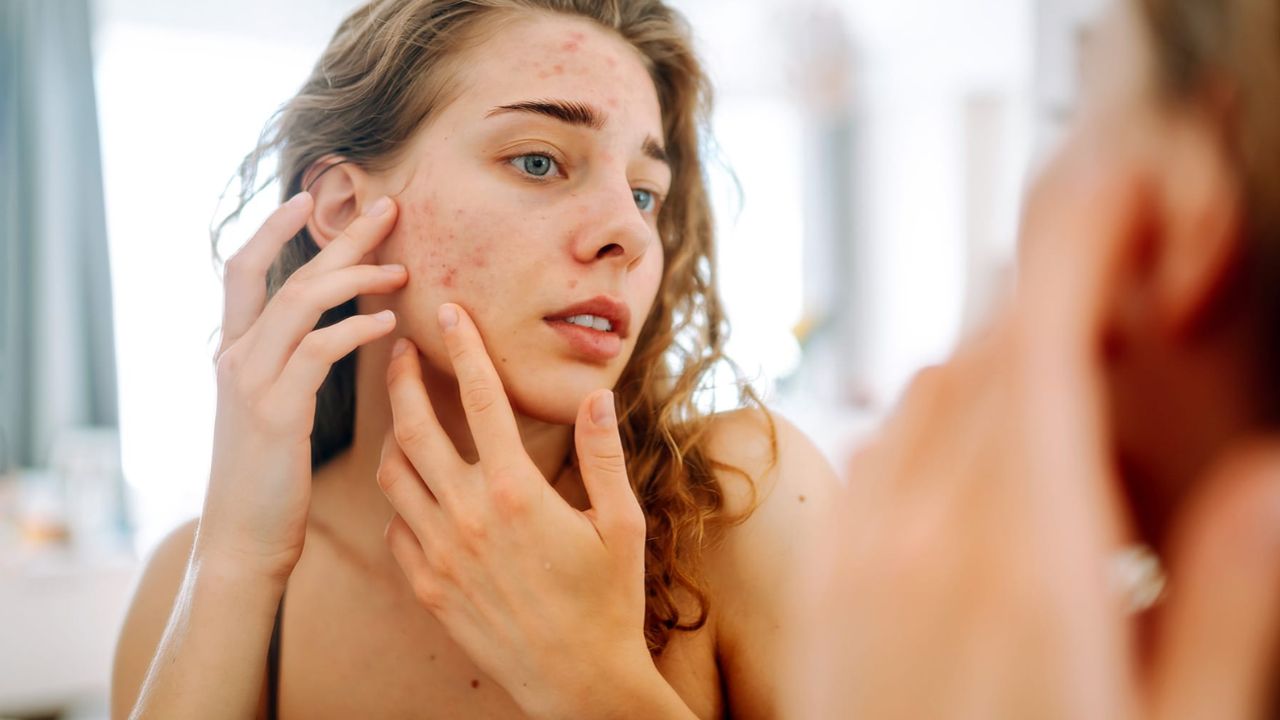
Not every acne ingredient is useful for hormonal acne. Here is what has real evidence behind it.
Salicylic acid clears congestion inside the pore. It is best for blackheads and whiteheads and can help prevent new clogs from forming .
Retinoids normalize how skin cells turn over. They are the closest thing to a long-term fix for acne-prone skin because they address the root of the clogging process .
Azelaic acid reduces inflammation and helps with post-acne marks. It is gentle enough for sensitive skin and can be used twice a day if your skin tolerates it .
Niacinamide regulates oil, calms redness, and strengthens the barrier. It is not a spot treatment, but it makes your skin more resilient overall .
Benzoyl peroxide kills acne bacteria. It can be useful for inflamed spots, but it is also drying. Use it as a spot treatment rather than all over your face, and do not layer it with retinoids.
Read Also: Peptide Skincare Routine For Beginners
What to Skip?
Harsh scrubs, alcohol-based toners, and strong foaming cleansers do not help hormonal acne. They damage the skin barrier, which leads to more inflammation and, paradoxically, more oil production . Picking and squeezing spots also makes things worse. It prolongs healing and increases the risk of scarring and dark marks .
Lifestyle Factors That Support Clear Skin
Skincare is only part of the picture. Hormonal acne is driven by internal factors, and a few daily habits can make a real difference.
Stress raises cortisol, which can aggravate breakouts. Sleep matters more than most people realize. And diet plays a role for some people. High-sugar foods and dairy can trigger breakouts in some individuals, though the research is not uniform . You do not need to eliminate entire food groups without reason, but paying attention to how your skin responds to what you eat can be useful.
When to See a Doctor
Over-the-counter skincare has a ceiling. If you have tried a consistent routine for twelve weeks and your acne is not improving, or if you are getting deep, painful cysts that leave marks, it is time to see a doctor .
Prescription options for hormonal acne include topical retinoids like tretinoin, hormonal treatments like certain birth control pills, and medications like spironolactone that block the effect of androgens on the skin . These treatments address the hormonal driver directly, which topical products cannot do. A doctor can help you decide which option is safe and skincare routine for hormonal acne in adults.
Conclusion
A skincare routine for adult hormonal acne should be gentle, consistent, and focused on supporting your skin rather than fighting it. Cleanse without stripping. Use one or two proven active ingredients rather than piling on products. Moisturize and protect your barrier every single day. And give it time. Skin turnover takes weeks, not days. If you stick with a simple, steady routine and seek medical help when you need it, you are giving your skin the best possible chance to stay clear through hormonal changes.